

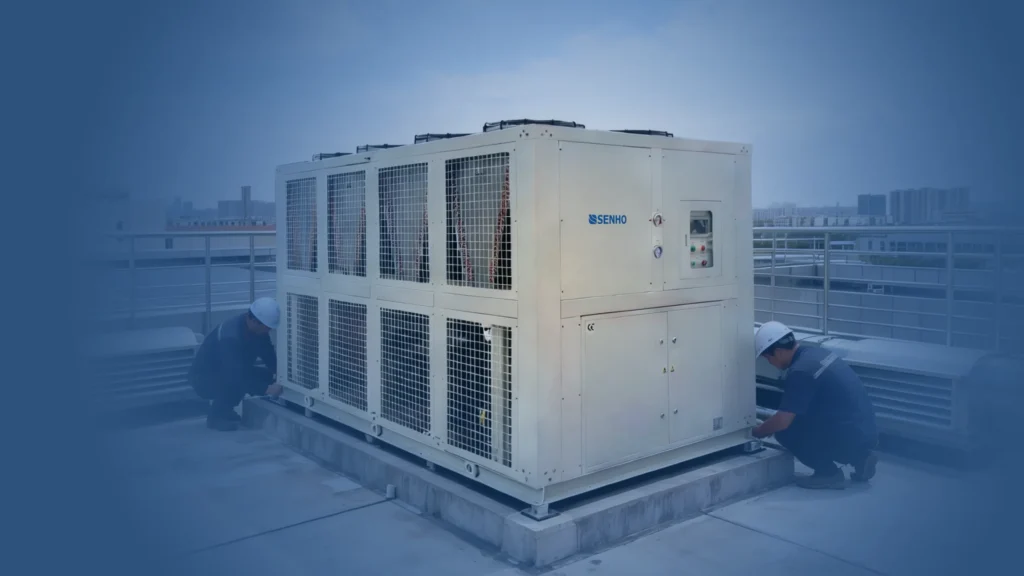
To ensure your industrial chiller operates at peak efficiency and enjoys a maximized lifespan, consistent routine maintenance is essential. Neglecting basic care can lead to unexpected downtime, costly repairs, and reduced cooling capacity.
Fundamentally, a healthy chiller relies on two critical thermal exchange processes:
- Efficient Heat Dissipation (Condenser): The condenser must effectively discharge heat into the environment. In harsh conditions, especially during summer, dust accumulation on air-cooled fins or scale buildup in water-cooled tubes can severely restrict heat transfer. This frequently triggers high-pressure alarms, forcing the chiller to shut down to prevent compressor damage.
- Optimal Heat Absorption (Evaporator): Proper water circulation within the evaporator is non-negotiable. If water flow is restricted, the cold energy generated by the refrigerant cannot be transferred away efficiently. This rapid temperature drop will trigger a low-pressure alarm and can potentially freeze and rupture the internal heat exchanger.
Beyond these two core principles, here is a comprehensive checklist of professional maintenance tips to keep your chiller in prime condition:
Installation & Operating Environment
- Ensure Optimal Ventilation: Always position the chiller in a dry, cool, and well-ventilated space to facilitate optimal ambient heat exchange.
- Verify Level Grounding: Install the equipment on a perfectly flat and solid foundation. Regularly inspect the unit during operation for any abnormal vibrations, which are often the first sign of an unlevel surface or mechanical imbalance.
- Follow Proper Shutdown Sequences: When turning off the chiller, always power down the compressor first. Allow the system pressure to equalize briefly before turning off the condensing fans or water pumps.
Routine Cleaning & Inspection
- Prioritize Condenser Cleaning: If you notice a drop in cooling performance, cleaning the condenser should always be your first troubleshooting step. Afterward, verify that all system valves are fully open and functioning correctly.
- Monitor Operating Pressures: Keep a close eye on the condenser’s working pressure. The ideal operating pressure should remain below 1.5 MPa. Regular cleaning and inspections are the best ways to maintain this optimal range.
- Air-Cooled Chiller Care: Regularly inspect the aluminum fins. Ensure airflow is entirely unobstructed and use compressed air or specialized fin cleaners to remove any dirt, dust, or filth covering the surface.
- Water-Cooled Chiller Care: Install a high-quality Y-strainer or filter at the cooling water inlet to prevent foreign matter from entering the system. Additionally, perform a chemical descaling and thorough internal cleaning of the condenser tubes every six months.
Long-Term Care & Preventive Measures
- Maintain Detailed Operation Logs: Consistently record daily running specifications, paying special attention to operating pressures, temperatures, and voltage. A historical log makes it much easier to diagnose slow-developing issues.
- Free Seized Pumps After Idle Periods: If the chiller has been offline for an extended time, do not start it immediately. Manually rotate the cooling water pump’s fan blade first to ensure the impeller hasn’t seized due to fallen debris or minor rusting.
- Prepare for Long-Term Storage: If the equipment will be out of service for a prolonged period (especially during winter), completely drain all water from the evaporator, condenser, and internal piping to avoid internal rusting and catastrophic frost-cracking.
- Schedule Lubrication Replacement: To guarantee the compressor remains properly lubricated and operates smoothly, it is strongly recommended to completely replace the refrigerant oil every three years.