

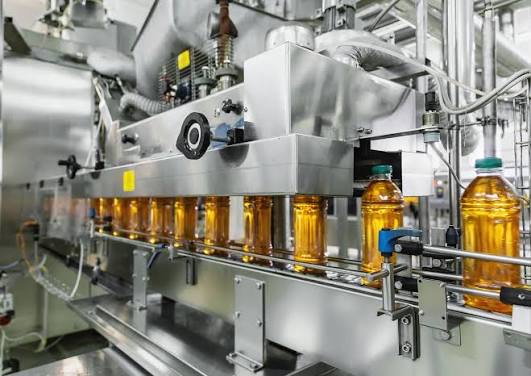
In the food and beverage (F&B) industry, temperature control is never just about “cooling.” It is the critical infrastructure that dictates product safety (HACCP compliance), flavor consistency, shelf life, and your bottom line. Whether you are pasteurizing milk, fermenting craft beer, or tempering chocolate, even a minor temperature fluctuation can lead to total batch spoilage.
Professional industrial chiller systems must deliver absolute stability, hygiene, and efficiency in highly demanding production environments. In this comprehensive SENHO guide, we decode the critical cooling nodes in F&B processes and reveal the hardcore engineering standards and calculation logic behind proper chiller sizing.
Part 1: Decoding Cooling Pain Points in F&B Processes
Different food processing lines have drastically different thermal demands. Accurately matching your equipment to your process is the first step in building a high-performance cooling system.
1. Dairy Processing: Rapid Cooling Post-Pasteurization
In the production of milk, yogurt, or cheese, dropping the temperature instantly after heat treatment (like pasteurization or UHT) is critical. If the product is not cooled rapidly, the risk of microbial growth increases exponentially, and the structural stability of the dairy product degrades.
- The Pain Point: The process requires absorbing a massive thermal load in a very short time, demanding extreme instantaneous cooling capacity from the chiller.
- The Solution: A high-capacity process chiller supplies chilled water or glycol through sanitary plate heat exchangers, accurately controlling the temperature of raw milk reception, post-pasteurization cooling, and fermentation tanks.
2. Brewery & Beverage: Fermentation Control and Cold Filling
Temperature is the defining factor in the biochemical reactions of brewing. It directly affects yeast activity, ester formation, and the final flavor profile. In carbonated beverage lines, temperature dictates CO2 solubility.
- The Pain Point: High filling temperatures lead to severe foaming and inaccurate fill levels. Unstable fermentation temperatures cause off-flavors and batch-to-batch inconsistency.
- The Solution: A dedicated Glycol Chiller provides a stable low-temperature loop for fermentation tank jackets, ensuring flavor consistency and supporting high-speed cold filling operations without disruption.
3. Chocolate & Confectionery: Tempering and Crystallization
The gloss, snap, and texture of chocolate depend entirely on the crystallization of cocoa butter.
- The Pain Point: Even a tiny temperature deviation during the tempering process can cause “fat bloom,” a dull surface, or a loss of brittleness.
- The Solution: Precision chillers supply highly stable circulating water to tempering machines and cooling tunnels, locking in the exact crystallization temperature required for premium confectionery.
Part 2: Beyond the Basics: Engineering Standards for Food-Grade Chillers
When purchasing a chiller, many facility managers focus solely on “cooling capacity” while ignoring the hidden maintenance costs and safety compliance issues unique to the F&B industry. A true food-grade chiller must meet two uncompromising standards.
Standard 1: Uncompromising Anti-Corrosion & Hygienic Materials
Food plants often use specialized water (such as RO water or DI water) and require rigorous daily CIP (Clean-in-Place) procedures using strong acid or alkali solutions. Standard copper or carbon steel plumbing will quickly corrode in these environments.
At SENHO, we insist on the highest standards for all wetted parts in our food-grade chillers:
- Stainless Steel or Titanium Fluid Circuits: Internal piping, water pumps, and evaporators must be upgraded to 304/316L sanitary stainless steel or titanium to prevent corrosion and heavy metal leaching.
- Physical Isolation: We utilize food-grade plate heat exchangers to ensure a 100% physical barrier between the refrigerant loop and the food product fluid, completely eliminating the risk of cross-contamination.
Standard 2: The Antifreeze Safety Line (FDA Compliance)
If your process requires sub-zero cooling (e.g., breweries or frozen foods), your system needs an antifreeze solution. This is a critical safety blind spot.
In the F&B industry, the use of standard industrial Ethylene Glycol (which is highly toxic) is strictly prohibited. Even in closed-loop systems, a micro-leak in a heat exchanger could introduce toxins into the product line, causing a catastrophic food safety crisis. You must mandate the use of FDA-compliant, USP-grade Food-Grade Propylene Glycol.
Part 3: Stop Guessing: The Scientific Chiller Sizing Formula
Accurate cooling capacity calculation is the foundation of chiller selection. Undersizing leads to production bottlenecks and equipment failure, while oversizing results in continuous energy waste and high capital costs.
For fluid cooling processes (such as wort, dairy, or juices), SENHO application engineers use a standard thermodynamic formula to calculate the exact heat load:
Q = c × m × Δt
| Variable | Physical Meaning | Engineering Description |
| Q | Cooling Capacity | The core parameter you need for your chiller (typically measured in kW or kcal/h). |
| c | Specific Heat Capacity | The specific heat of pure water is 4.187 kJ/(kg·°C). For high-Brix syrups or milk, specific values must be applied. |
| m | Mass Flow Rate | The total weight of the fluid that needs to be processed per hour (kg/h). |
| Δt | Temperature Difference | The difference between the fluid’s initial entering temperature and the target leaving temperature. |
The Safety Factor:
Once the theoretical Q value is calculated, a professional engineer never sizes the chiller based on that exact number. To account for ambient heat gain, pipe insulation loss, and future production expansion, we typically multiply the calculated result by a safety factor of 1.2 to 1.5 to determine the final chiller capacity.
Optimize Your Production with SENHO
At SENHO Chiller, we don’t just sell cooling equipment; we engineer thermal solutions tailored to the strict hygiene and performance standards of the food and beverage industry.
Are you upgrading your brewery, dairy plant, or packaging line? Don’t risk your product quality with guesswork. Contact SENHO’s application engineering team today for a free, customized cooling load calculation and discover our range of sanitary stainless steel and glycol process chillers built for your success.